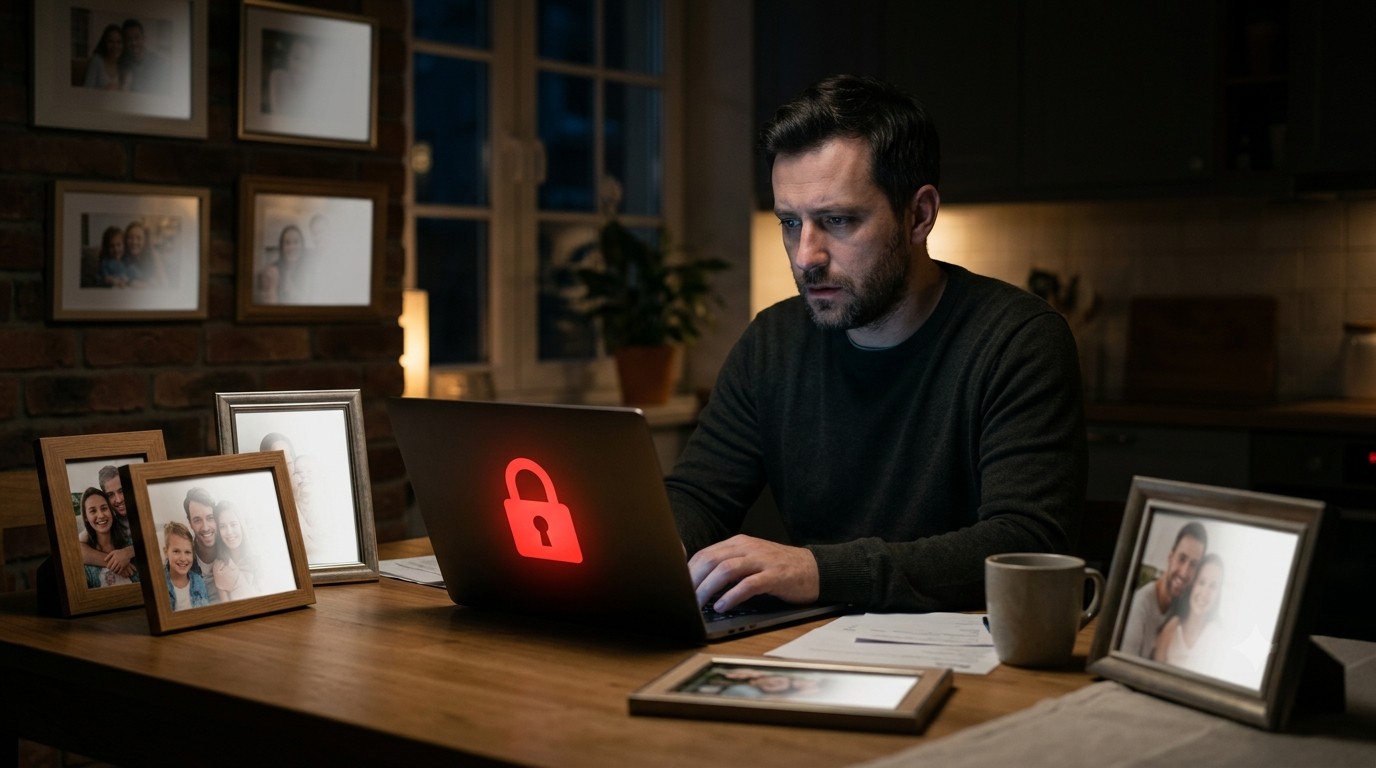
Mark did everything right. That's what makes his story worth five minutes of your time.
It was February 2021, in the depths of the pandemic. Mark, a father in San Francisco, noticed his toddler's groin was swollen and painful. He rang the doctor. Because of Covid, the consultation would happen by video, and a nurse asked him to send photos beforehand so the doctor could see the problem. He took them on his Android phone. The doctor prescribed antibiotics, the infection cleared up, and that should have been the end of a very ordinary parenting story.
It wasn't. Because his phone backed his photos up to Google, and Google's software was watching.
What happened next
Two days later: Google's automated scanning flagged the medical photos as potential child abuse imagery. His account was disabled. Email, photos, contacts, calendar: everything, instantly.
The same week: Google filed a report, as it is required to do for flagged material, and the case was referred to the San Francisco Police Department. Mark appealed to Google and explained the medical context. The appeal was rejected.
December 2021: The police investigation concluded. The investigator's report stated plainly that no crime had occurred. Mark was completely cleared.
After that: He sent the police report to Google and asked for his account back. Google refused, and permanently deleted it.
Take a moment with that last line. The police looked at the full facts and cleared him. The company deleted his digital life anyway, and there was nobody he could appeal to, because a company's terms of service are not a court.
What he actually lost
This is the part that stays with me. It wasn't just an email address.
More than a decade of email and contacts. His calendar. Every photo and video of his son's first years that lived in Google Photos. His phone number, because he was a Google Fi mobile customer, so even his SIM died with the account. And then the dominoes: without that email address and phone number, he couldn't receive the security codes needed to sign in to his other accounts across the internet. One automated decision, and a stranger's algorithm had repossessed his digital life.
To be fair to Google
The scanning exists for a genuinely serious reason: finding real child abuse imagery, which tech companies are legally required to report. Nobody sensible objects to that goal. The problem is what the system cannot see: context. Software compared pixels and raised an alarm. Human reviewers upheld it without ever knowing there was a doctor, a prescription, and a worried parent on the other end. Even the police saying "no crime occurred" changed nothing.
So this isn't a story about a wicked company. It's a story about what happens when your email, your phone number, your identity and every photo you've ever taken all live behind one account, governed by one set of terms, judged by one automated system, with no independent appeal. In the terms you agreed to, all of this is allowed.
The question worth asking yourself
Not "could this happen to me?" It probably won't. False flags like Mark's are rare, and that's honestly true.
The better question is: if it did, what would you lose? If your account vanished tonight, cleared out by a mistake, a hack, a billing mix-up or a flag you'll never get explained, how many years of your family's photos go with it? If the only copy of your memories lives inside someone's terms of service, then keeping them isn't really up to you. It's up to the algorithm having a good day.
Mark's story has one quiet lesson anyone can act on: keep a copy of what matters somewhere that no account, no company and no algorithm can touch.
A photo library that can't be deleted from afar
myUSBdrive keeps your photos, films and music on your own USB drive, on your own shelf, streamed to every device in the house. There's no account to lock and no algorithm to disappoint. Free at home, forever, and the whole kit costs about £95, once.
See what you need to build yoursSources: Mark's story was reported by Kashmir Hill in The New York Times (21 August 2022), including the Houston case. Further reporting: Gizmodo, 9to5Google, and PhoneArena on Google's refusal to reinstate the account after police cleared him.