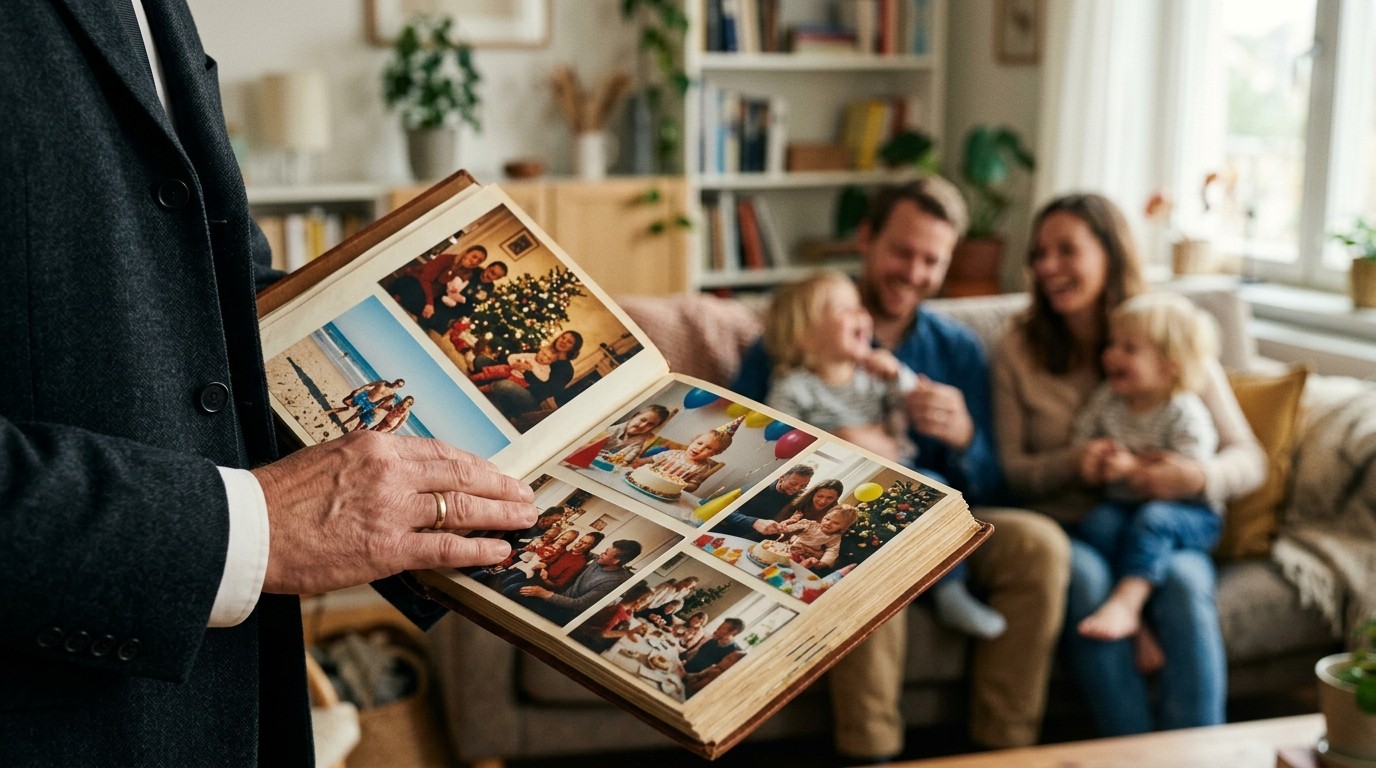
When you created your Google account, a box asked you to accept the Terms of Service. Be honest: did you read them? Almost nobody does. Which is a shame, because that agreement says some genuinely surprising things about your photos, and you signed it.
I read the terms so you don't have to. Before we get to the list, though, there's a popular myth to clear up, because it gets repeated everywhere and it isn't true.
The myth: "Google owns your photos once you upload them"
No, it doesn't. Google's terms say it plainly: "Your content remains yours." You keep the copyright in every photo you take. Anyone who tells you Google takes ownership has not read the terms. But before you relax, keep reading, because what you keep is ownership. What you give away is something quieter: permission.
Here's how it works. In exchange for the service, you grant Google a licence over your content. Ownership without control is a strange kind of ownership, though, so it's worth knowing exactly what that licence lets them do. Here are seven things, straight from the agreement, in plain English.
1. The licence is worldwide and royalty free
It applies everywhere on Earth, and Google never owes you a penny for anything it does under it. Standard legal language, but worth pausing on: it's the same phrase a stock photo agency uses when it licenses an image for commercial use.
2. They can host, reproduce and distribute your photos
Copies of your pictures can be made, stored and moved between Google's data centres around the world. That's how a cloud service works, of course. It also means you genuinely don't know which countries your family album is stored in, or how many copies of it exist.
3. They can modify them and make derivative works
The examples given are innocent: reformatting, translation, thumbnails. But the right granted is broader than the examples, and "derivative works" is one of the most powerful phrases in copyright law.
4. They can publish and publicly display content you share
Anything you've made visible to others can be published, publicly performed or publicly displayed by Google. Shared an album with the grandparents? That sharing choice carries legal weight you probably didn't think about at the time.
5. The licence can be passed to people you've never heard of
Google can sublicense these rights to its contractors and service providers. You agreed to a licence not just with Google, but with an open-ended list of companies that work for Google. You will never know their names.
6. Your photos can help build products that don't exist yet
The licence isn't limited to running today's Google Photos. It covers improving their services and developing new ones. What might a photo-hungry company want to develop in the age of AI? The terms don't say, and that's rather the point: they don't have to.
7. It doesn't end when you stop using the service
The licence lasts "for as long as your content is protected by intellectual property rights", and if you remove your content, Google's systems stop making it publicly available "in a reasonable amount of time". Not instantly. Not on a date you choose. A reasonable amount of time, as judged by them.
One more thing: your photos are being read
Alongside the licence, the terms tell you that Google's automated systems analyse your content. That's how spam filtering and virus scanning work, and it's also how photo libraries get scanned and, occasionally, how families get flagged by mistake. That story deserves a post of its own, and it's coming.
So is Google evil? No. But this is a trade.
None of this is hidden, and none of it is illegal. Google offers a genuinely brilliant service, and the licence above is the price. Millions of people are happy with that trade, and that's fine.
The only mistake, I'd gently suggest, is not knowing you made a trade at all.
Here's the question I found myself asking: what would the terms and conditions look like for photos stored on a drive in your own home? There wouldn't be any. No licence, no sublicensees, no "reasonable amount of time". Your photos, on your drive, under your roof, governed by nothing but the laws of physics and your own house rules.
That question is why myUSBdrive exists
It turns a Raspberry Pi and any USB drive into private cloud storage and a media server for your whole house. Free at home, forever, no account needed. The whole kit costs about £95, once.
See what you need to build yoursSources: All quotes are from the Google Terms of Service (policies.google.com/terms), "Permission to use your content" section, as published at the time of writing. Read them yourself; it takes ten minutes and it's your photo library.